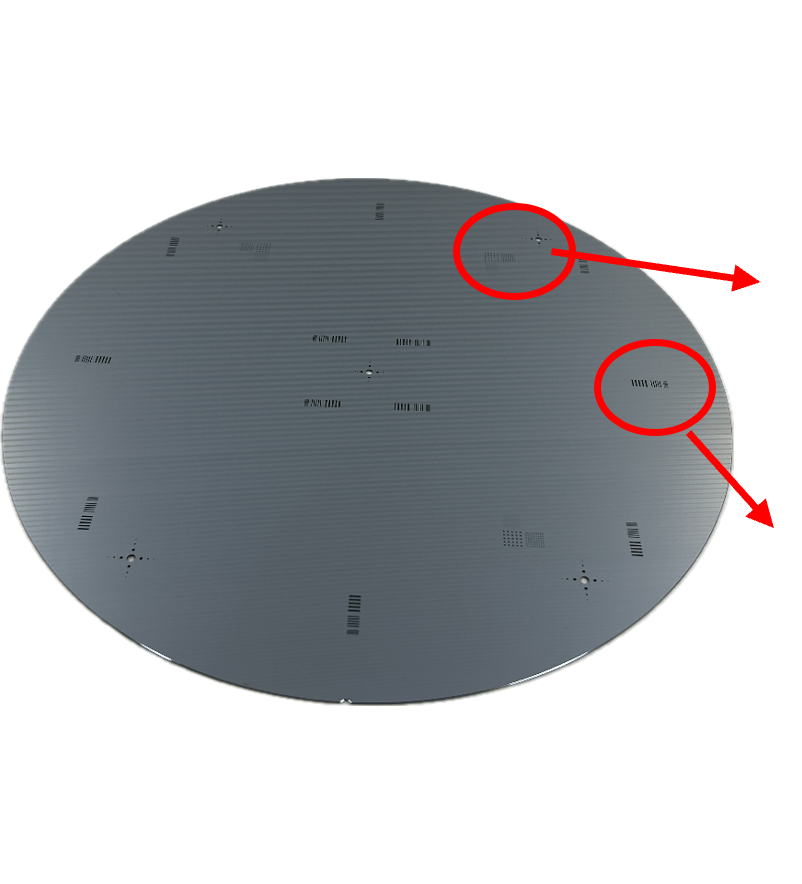
MEMS Wafer Processing
Philtech provides MEMS processing, including deep silicon etching and anisotropic wet etching, on 100 mm, 150 mm, 200 mm, and 300 mm wafers. The structures shown are selected processing examples. Please contact us to discuss other geometries and processing requirements.
MEMS (microelectromechanical systems) combine microscopic mechanical structures with electrical functions. They are used in sensors, actuators, and other applications.
MEMS fabrication combines processes such as thin film deposition, photolithography, and etching to create microstructures. The processing method must be selected according to the geometry and dimensions of the trenches, holes, pillars, or other features to be formed on the substrate.
Discuss MEMS Wafer Processing
Contact UsDeep Silicon Etching
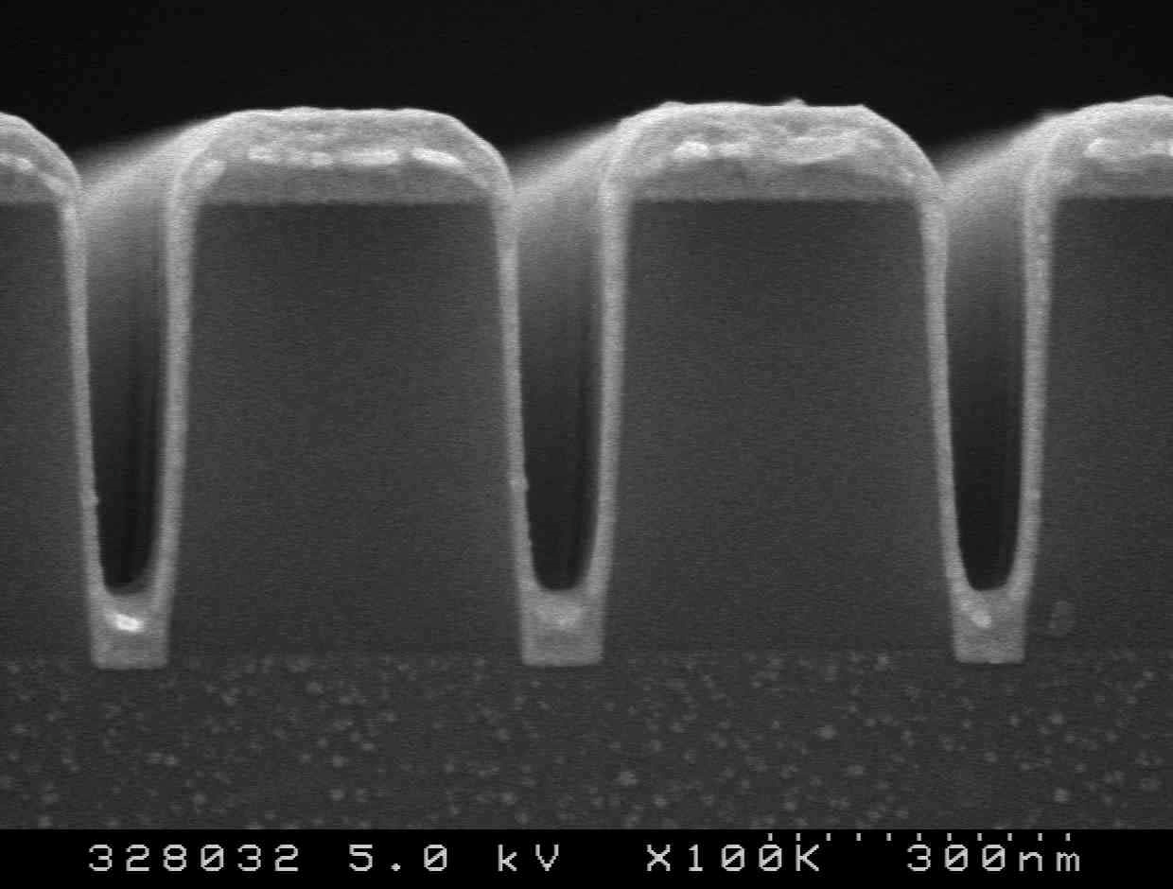
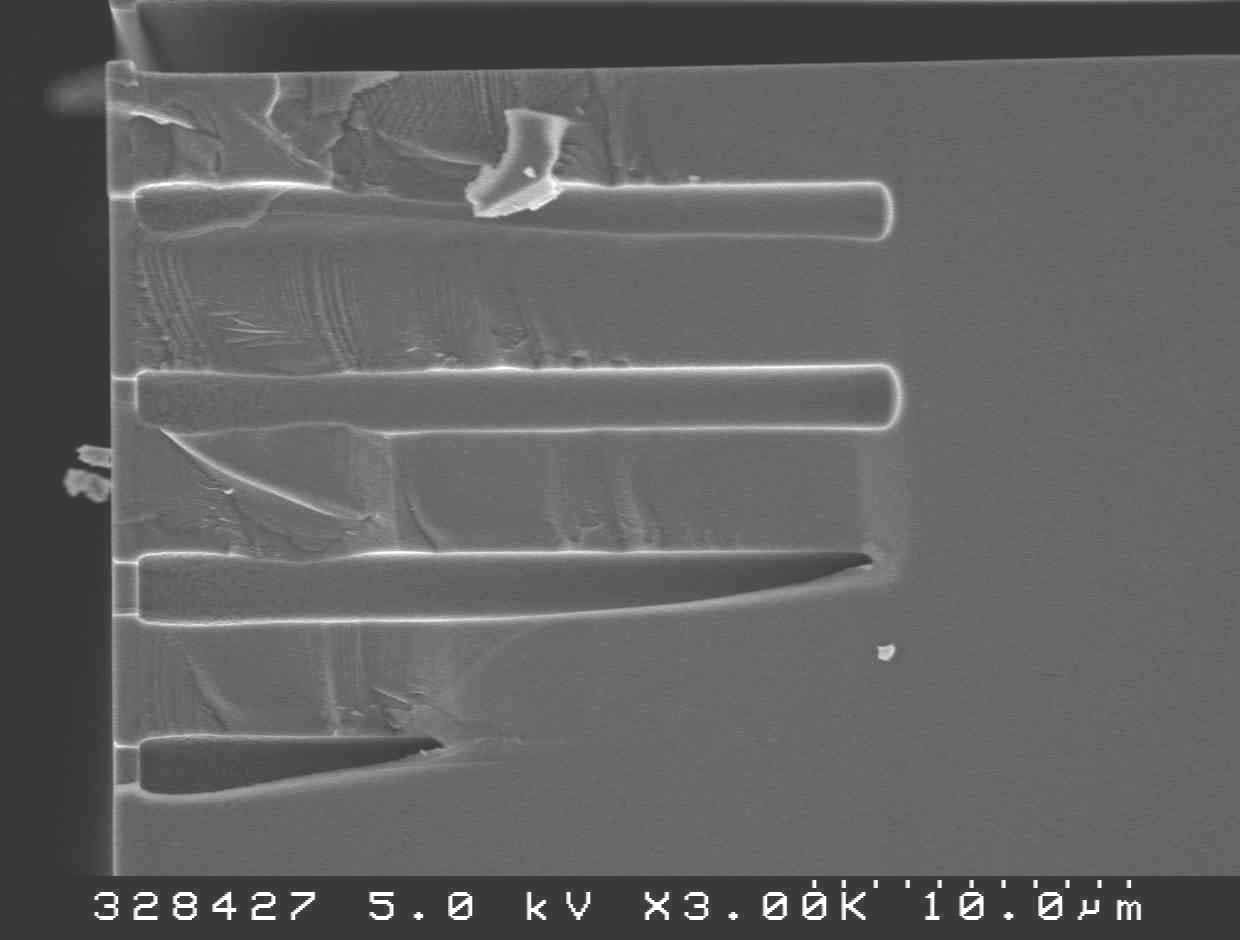
Deep silicon etching forms deep trenches, holes, and other features in silicon substrates. The Bosch process, a form of deep reactive ion etching (DRIE), alternates between etching and the formation of a sidewall passivation layer.
This enables the formation of high-aspect-ratio structures with a large depth relative to their width. The difficulty of processing varies with pattern dimensions and density.
Bosch Etching Examples
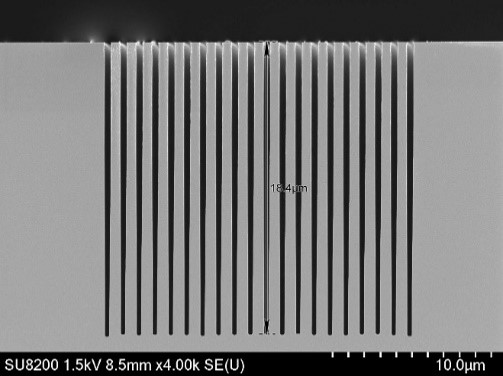
Width: 0.4 µm; depth: 18 µm
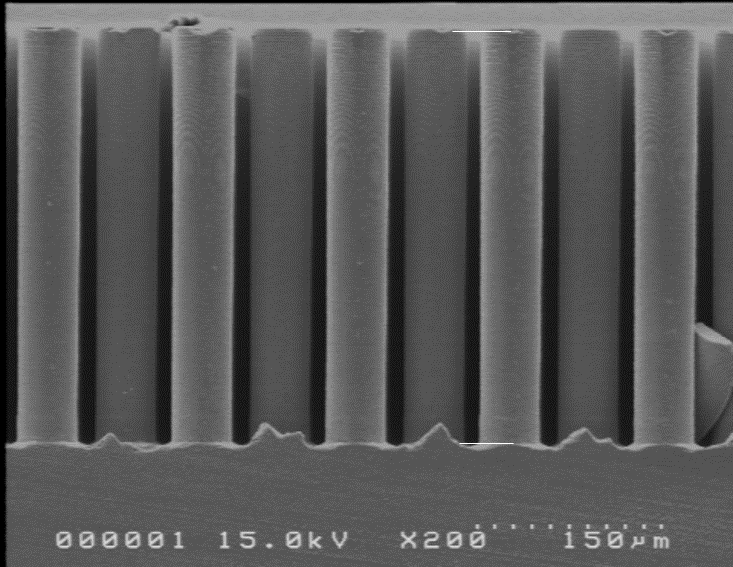
Diameter: 50 µm; depth: 340 µm
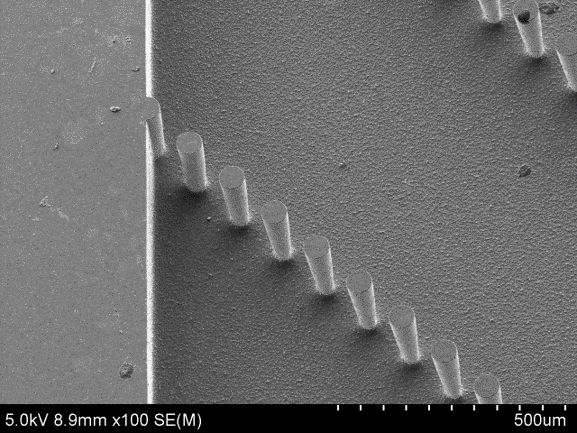
Diameter: 60 µm; depth: 200 µm
Related Products: Trench and Hole Patterns
Each product page shows pattern geometries, layouts, and cross-sectional observation examples. Processing methods vary by product.
 Trench-Patterned Wafers →
For products made using Bosch DRIE and non-Bosch silicon etching, this page presents trench fabrication examples and examples of film coverage and gap-fill evaluation.
 Hole-Patterned Wafers →
This page presents hole fabrication examples using non-Bosch silicon etching, including pattern layouts and cross-sectional observations, as well as deposition and plating evaluation examples.
Anisotropic Silicon Wet Etching
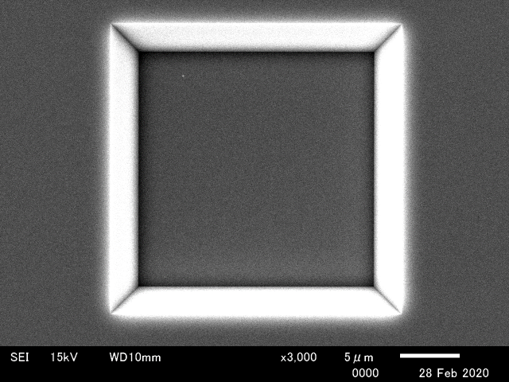
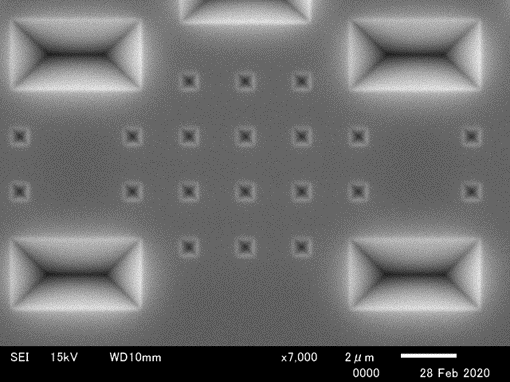
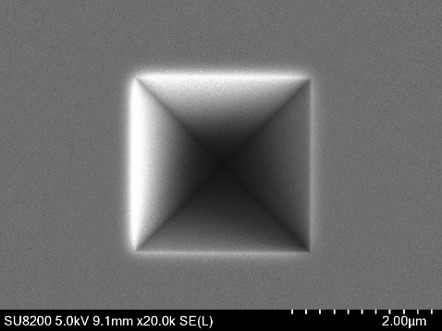
This method uses chemical solutions such as KOH (potassium hydroxide) and TMAH (tetramethylammonium hydroxide) and takes advantage of differences in etch rate between silicon crystal planes. It is used to form structures with sloped surfaces along crystal planes.
TMAH Wet Etching Examples
These examples use silicon substrates with a (100) surface orientation. Sloped surfaces form because the (111) planes etch more slowly.
Mechanical Patterning
Methods for forming patterns such as holes and trenches include abrasive blasting.
Through-Wafer Machining Examples on a 300 mm Silicon Wafer
This example shows through-holes with a diameter of 250 µm formed in a silicon substrate measuring 300 mm in diameter and 775 µm in thickness. This is a low-cost processing technique because it does not use dry etching.