Japan's stagnant consumption has also been a long-term problem. We can feel this in our daily lives. I think there is a strong culture among some generations where saving money is seen as a virtue. Traditional shops that have been around for a long time are disappearing, while the number of convenience stores, where people can easily buy only what they need, seems to be increasing. I believe this is also connected to the declining number of marriages. Many people live with their parents to save on living expenses. If people do not get married, their meals tend to become simple. Since they can survive on a lower income, they stop looking for high-paying jobs.
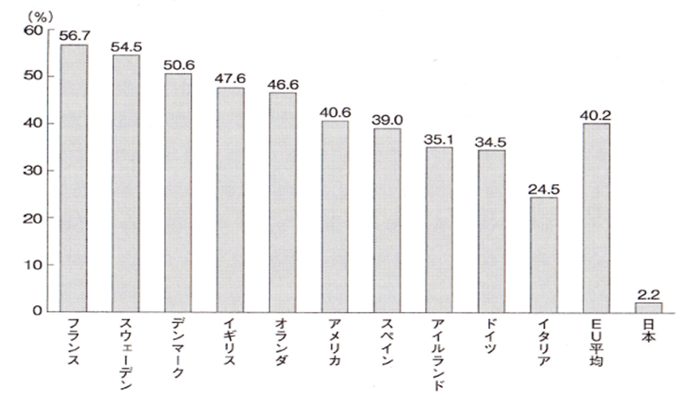
These daily life feelings are also shown in statistical data. According to recent data, Japan's household consumption in February 2026 decreased by 1.8% compared to the previous year. Although there is temporary recovery sometimes, the consumption is evaluated as "weak and unstable." Whether we look at it over a 30-year period or a short period, spending is not growing. For your reference, Japan's household expenditure data is shown in Figure 3-7.
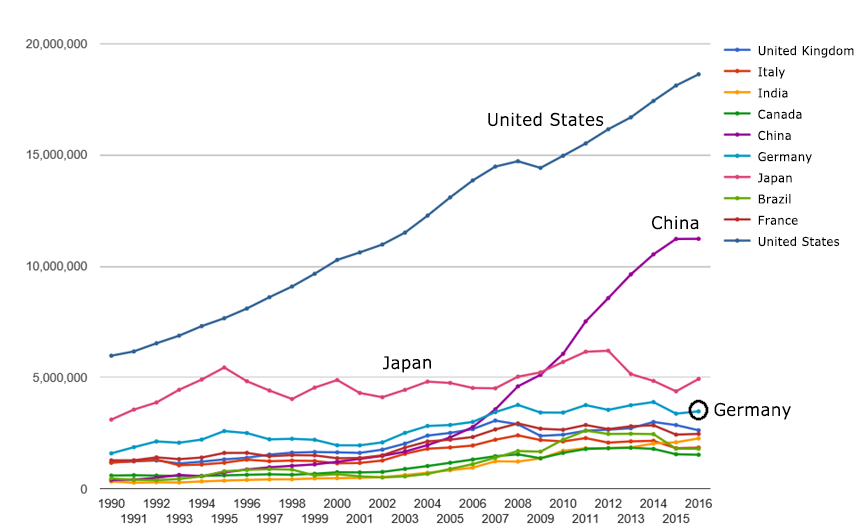
On the other hand, financial assets keep increasing. The trend data up to 2024 is shown in Figure 3-8. According to the latest data, household financial assets reached a record high of about 2,350 trillion yen at the end of 2025. Since it was about 1,400 trillion yen around the year 2000, 2,350 trillion yen means an increase of about 1.6 times. More importantly, when we look at the details, cash and savings make up about 1,100 trillion yen, which is still the largest part. Investment trusts are also increasing rapidly because their values are growing. Money is not being spent; instead, it keeps piling up.
People might not notice this in their daily lives. In Japan, consumption spending has been stagnant for a long time and is still showing a downward trend recently. On the other hand, the balance of household financial assets keeps breaking record highs. The data clearly shows a cultural structure in which money does not circulate through the whole economy, but instead keeps accumulating as if it were stored away in a hidden warehouse.
This phenomenon is not just a problem of income or systems. Instead, we can think of it as the strength of "mental energy" at the root of people's behavior. In other words, the desires or impulses created by interacting with the outside world (the energy that moves people to spend money) have become weaker. Instead, the action of saving money to prepare for an uncertain future has become stronger. As a result, two seemingly contradictory things—spending does not grow, but assets keep accumulating—can be explained by the same principle: a decrease in the release of mental energy.
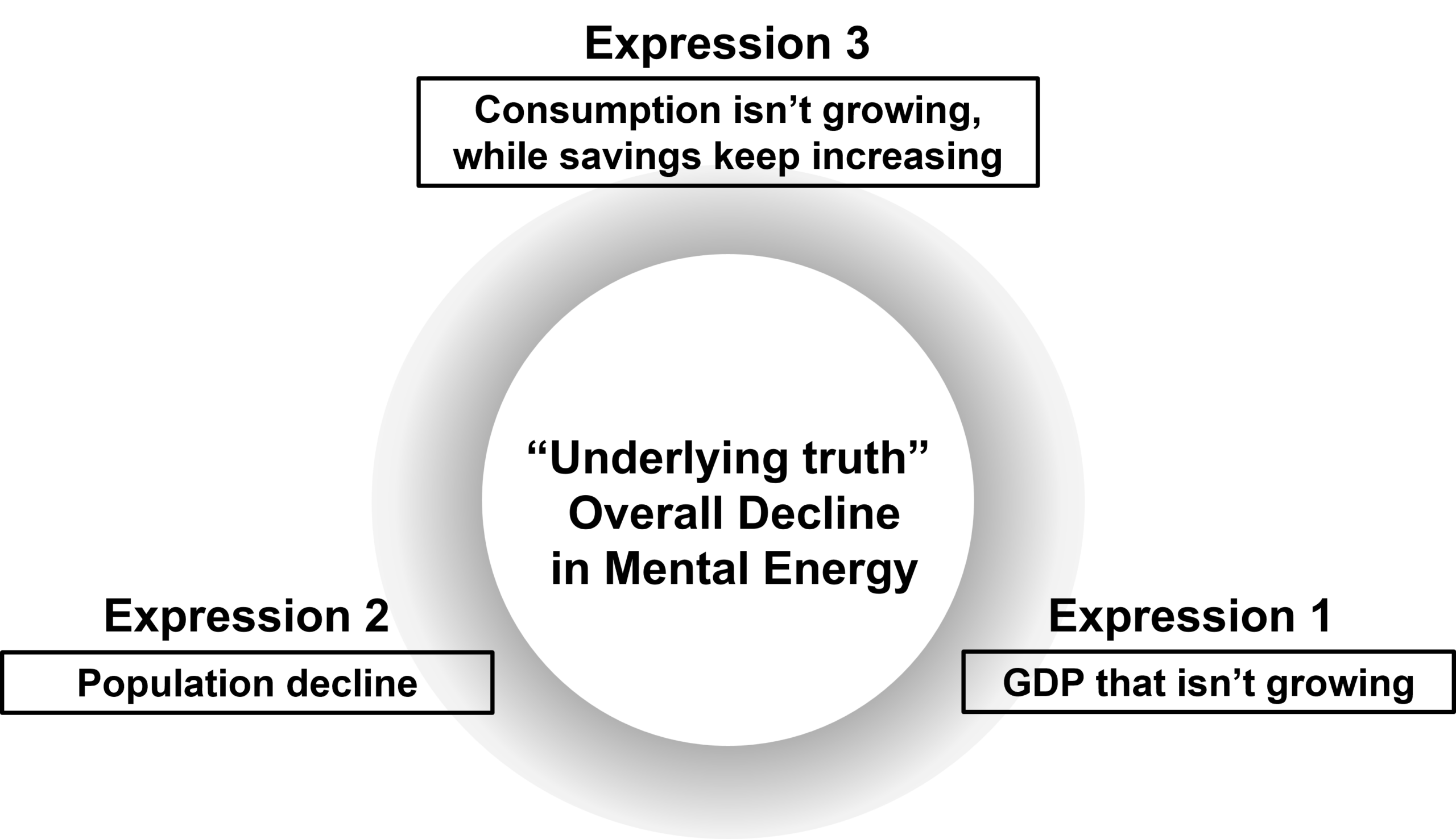
I have already talked about the relationship between truth and expression regarding the stagnant GDP and the declining population. Table 3-3 puts these relationships together, showing how four expressions of social phenomena connect to one single truth: the decrease in mental energy.
Describing a Society in Which Energy Release Has Decreased (4)
Vol.19-24
May 31, 2026
Content of This Article
Describing a Society in Which Energy Release Has Decreased (4)
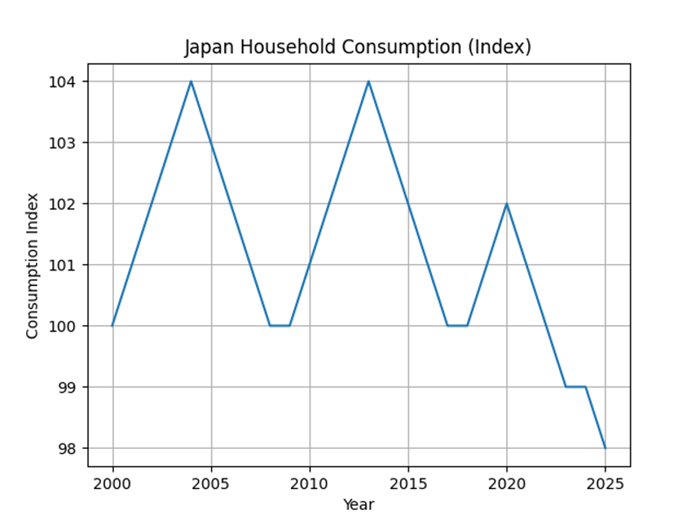
Figure 3-7: Japan's household expenditure indicators showing stagnant consumption.(Source: Japanese Government Data)
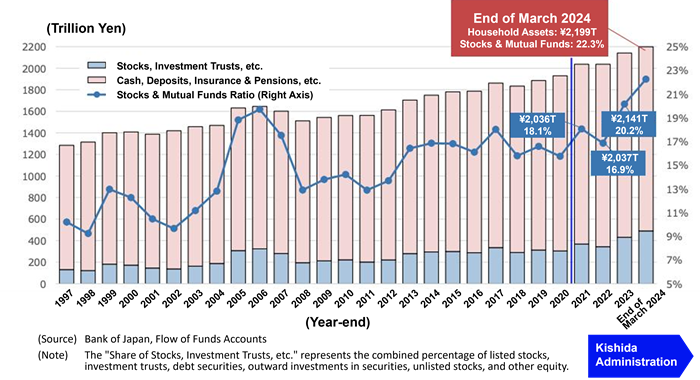
Figure 3-8: Trend data of Japan's financial assets. It keeps increasing over the long term.

Table 3-3: The relationship between social phenomena as expressions and mental energy as the truth. Data represents the numerical expression of mental truth. The interpretation explains the energy state at the root of the data.
Table 3-3 explains how the "decrease in mental energy" affects Japanese social phenomena, from the perspective of the relationship between "truth" and "expression." Furthermore, because these social phenomena also influence one another, there is another view that interprets them as a chain of cause and effect.
However, when we look at things through the framework of "truth" and "expression," a simple explanation of cause and effect is not necessary. Even so, the method of connecting and explaining social phenomena through causes and effects is often used in the news, and it is useful as an easy-to-understand interpretation.
Therefore, let us try to explain these social phenomena by connecting them specifically as relationships of cause and effect. However, if we do not notice that the "problem of mental energy" lies at the root of everything, we cannot find appropriate solutions. We would end up merely pointing out the problems as a chain of cause and effect, and we will never reach a real solution.
We often see news reports that explain economic indicators like GDP by connecting them to exchange rates or interest rates. Although they provide explanations, they are merely connecting social phenomena as expressions with a thread of cause and effect; they do not explain the underlying truth.
Now, let us trace social phenomena along the thread of cause and effect, starting with "marriage," which we touched upon in the discussion of population decline.
If someone chooses not to marry and to live a modest life alone, living with their parents can be seen as an efficient lifestyle choice. If they are alone, there is less friction, and a stable life is possible.
Other options, such as communal living or share houses, are also conceivable. In that case, the desire to own a home weakens. Even if their income is low, it is not inconvenient, and the mental burden remains low.
They begin to think that they can get by without being a regular, full-time employee. As a result, a society with an increasing proportion of non-regular employment is formed.
When people begin to aim for a modest lifestyle, their past longing to own a car fades, and their overall desire to consume decreases.
However, anxiety about the future arises, making them wonder if it is really okay to stay this way. To relieve this rising anxiety, the desire to save money increases. The part of their income that remains after subtracting necessary living expenses begins to be directed toward savings rather than consumption as a priority.
In other words, it can be explained through cause and effect that both the decrease in consumption and the increase in savings are caused by a lifestyle that restrains desires.
The cause-and-effect relationships described so far could also be explained in reverse order, leading back to population decline. In other words, this explanation is reversible; that is, it is also possible to create a cause from an effect. The fact that it is reversible means that phenomena such as population decline, the increase in savings, stagnant consumption, a modest lifestyle, and even a non-growing GDP all carry the same meaning and hold the same value. That common value is the underlying truth: the "decrease in the energy of mental desires."
As already mentioned, mental desires are born from contact with things that are different or heterogeneous, and in this respect, they overlap with the concept of thermal energy in thermodynamics. Therefore, what is important as a solution is not to create a homogeneous society where everyone is equal, but to build a culture that accepts different things and connects with them.
Since a mind exists within each individual, there are people with different values, including those who might be called "eccentric." To increase mental energy, it seems important not to reject people who fall outside of three sigma, but rather to recognize them, interact with them, and accept them.
While it cannot be denied that friction will arise at this time, energy is also generated. This is true not only at the individual level, but also at the levels of corporations and nations.
The Meiji Restoration and post-war Japan can be seen as eras when contact with different cultures advanced. And those periods coincided with times of Japanese development, population growth, and GDP growth.
So far, we began in Chapter 1 with an explanation of the fundamental principle of "truth and expression."
In Chapter 2, we used the concepts of thermodynamics to explain how contact with different things generates energy.
Then, in Chapter 3, we discussed how the truth of decreased energy release is expressed through various social phenomena.
While the most fundamental principle remains the relationship between truth and expression, the idea that contact with different things generates energy was also a crucial principle.
Although I used thermodynamics to explain this, my hope was simply that the explanation would make sense to you, even without a deep understanding of thermodynamics itself.
Because I wove thermodynamic concepts into the explanation here and there, it might have felt a bit forced or imposed upon you.
Conversely, trying to fully master thermodynamics before diving into this book's explanation would be unrealistic; your thoughts would simply grind to a halt along the way.
Therefore, you do not need to master the physics that I may have seemingly forced upon you; if the explanation so far made even a little bit of sense, that is more than enough.
Books on thermodynamics do exist, but they are highly complex and difficult. Therefore, after this section, I will include an appendix that explains thermodynamics just enough for you to understand the basics used in this book.
In the next section, I will provide that appendix.
[ Author : Y. F. ]